
Marmorino is a lime and marble dust plaster with a tighter grain and matte sheen than Venetian. Specify it for architectural interiors that need a warm mineral surface holding scale at three meters. Pigment is integral to the body coat, the trowel-only finish refuses high polish, and the wall holds light instead of throwing it back.
The finish in plain language
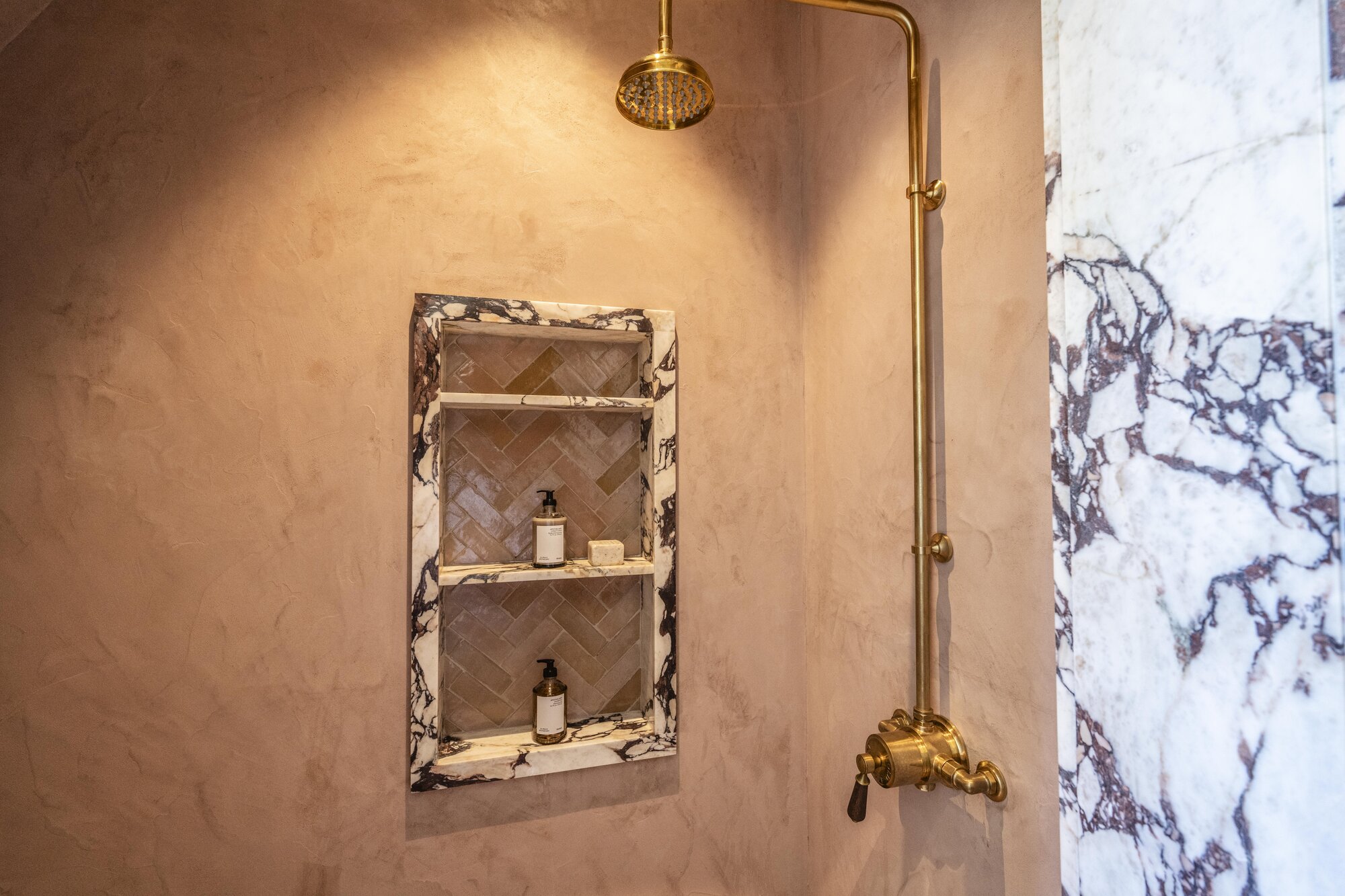
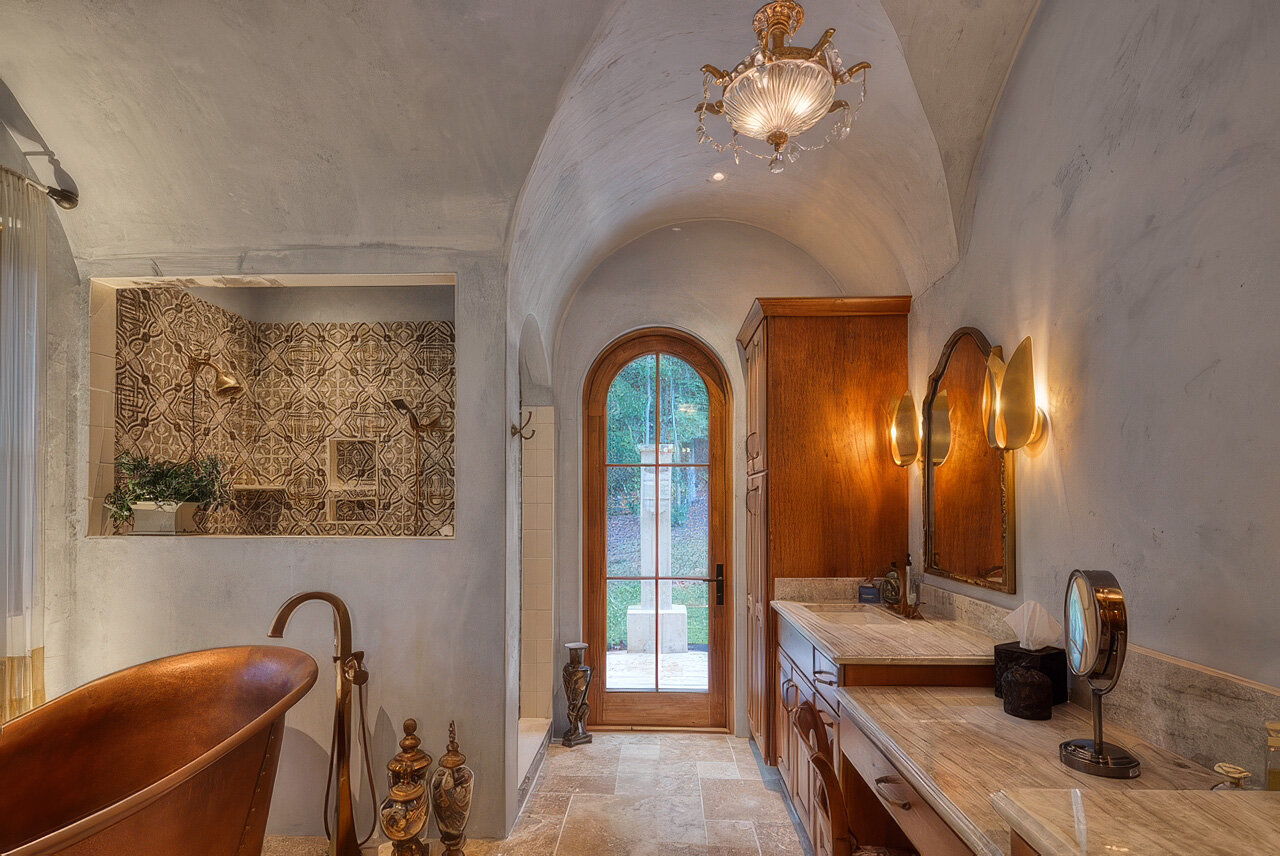
Marmorino sits in the same family as Venetian plaster. Same lineage, same lime-and-marble vocabulary, different behavior at the wall. The aggregate is finer than a polished Venetian, the body is denser, and the finish discipline stops short of the high-gloss burnish that gives Venetian its wet-stone reflection. What you get is a surface that reads as mineral rather than mirror: tight grain at close range, matte sheen at distance. The wall holds light instead of throwing it back.
The confusion almost always runs in one direction. Specifiers write “Venetian” when they actually want marmorino, because Venetian is the word the market knows. The result is a lobby or restaurant wall that gleams under sconce light, picks up every fingerprint near a banquette, and reads cold at architectural scale. Marmorino is the answer when the brief calls for the feel of stone without the reflection of polished stone.
How the finish behaves at scale
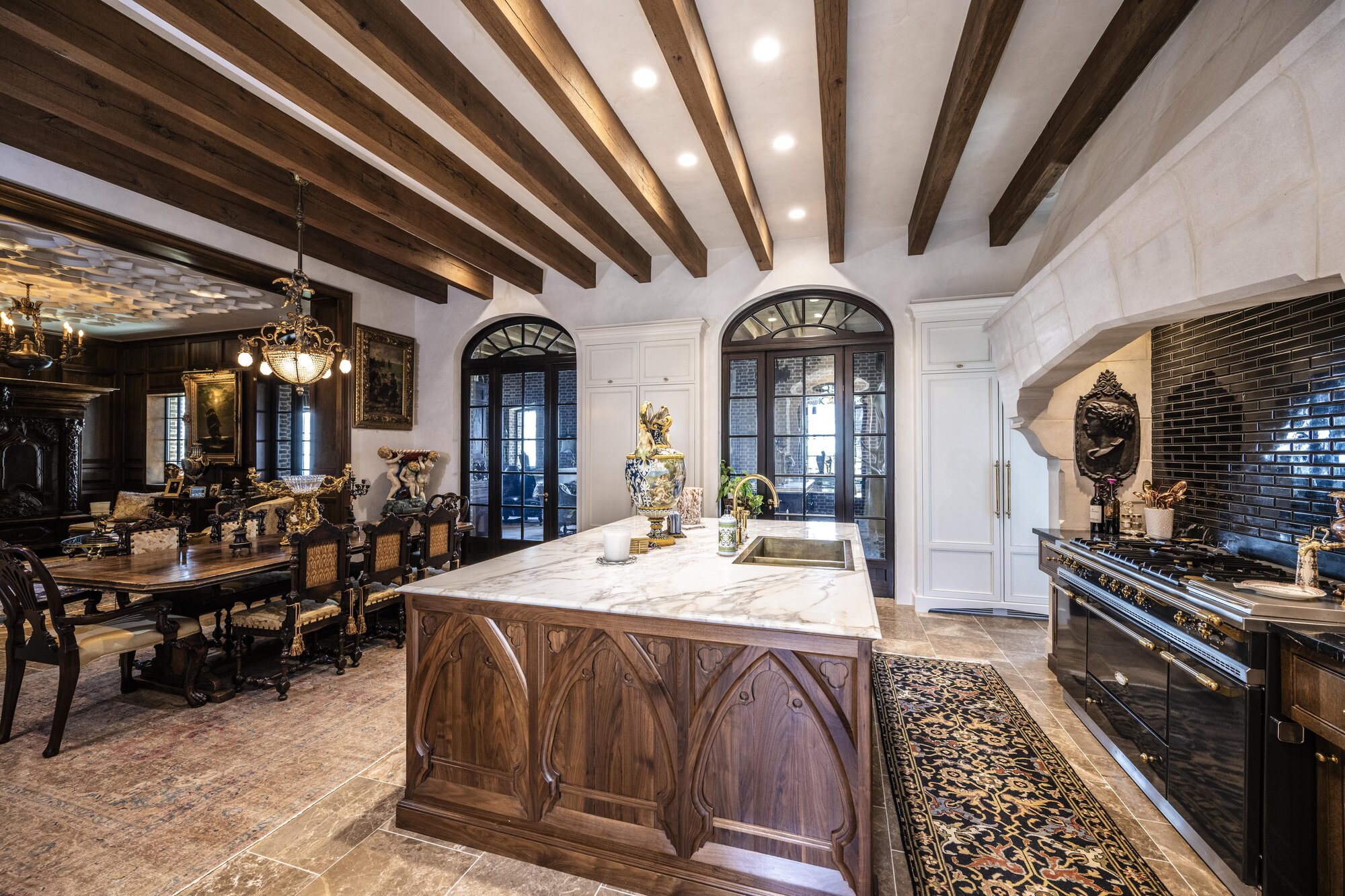
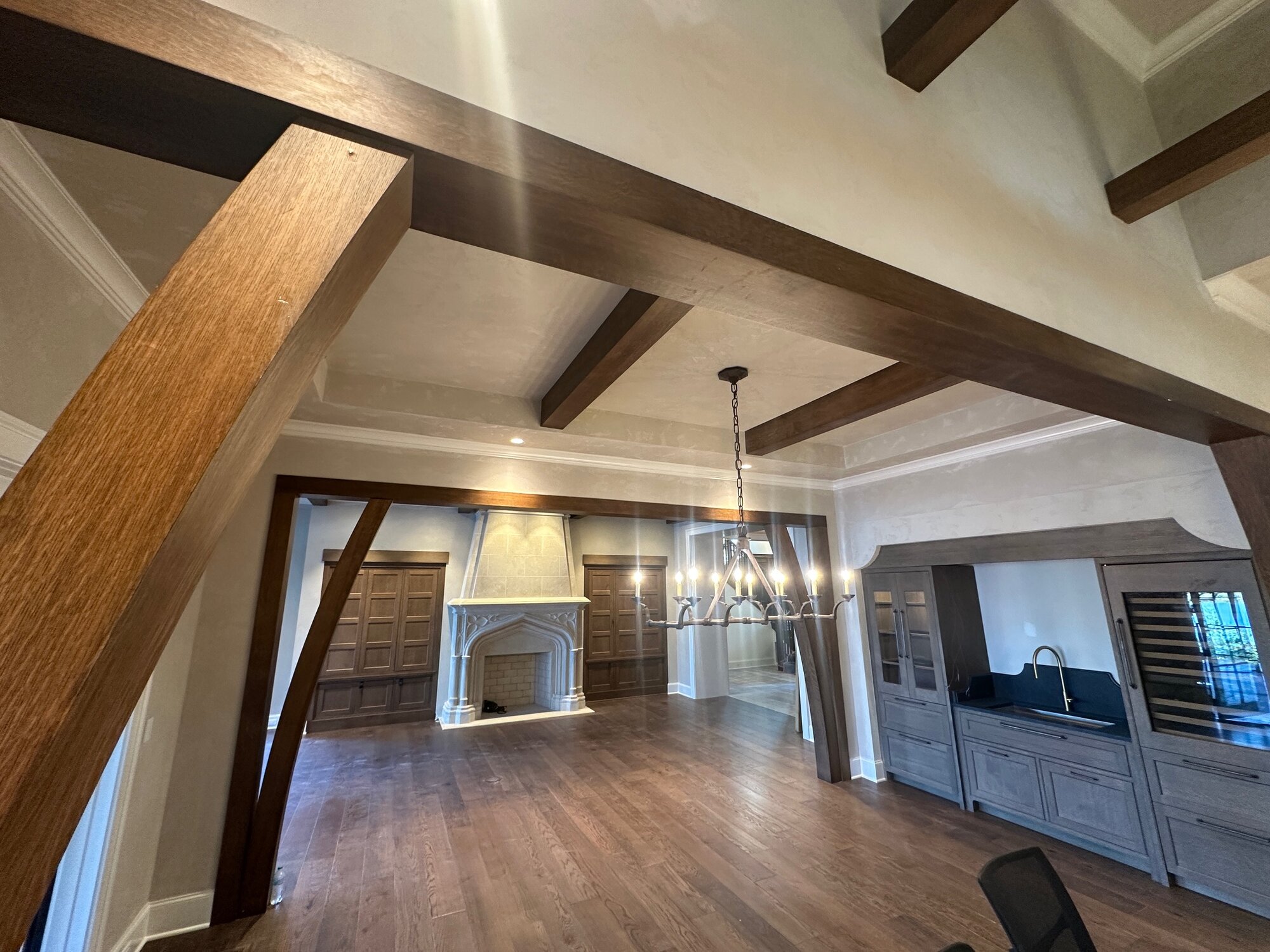
Read across a wall, marmorino reads as a single tight mineral plane. The trowel pattern is there if you walk up to it (a soft cloud, not a directional stroke) and disappears as you step back. That behavior is what makes the finish hold at architectural scale.
On an entry hall, an arrival sequence, or a long uninterrupted public room, the architectural cadence of the wall (a recessed plinth, a deep base reveal, the breaks where the millwork lands) needs to read at distance. A polished Venetian on that same wall would flatten the breaks, because the reflection is what the eye finds first and the architecture disappears behind the sheen. Marmorino keeps the breaks legible. The matte body lets shadow settle into the reveals instead of bouncing off them, and the wall does its architectural job at three meters while still rewarding a close look at thirty centimeters.
Daily wear is the second case. On any wall that takes hand or shoulder contact (the back of a banquette, a corridor that runs through a busy room, the wall behind a kitchen island), a polished Venetian shows every contact mark within a season. A marmorino with a trowel-only top coat carries the same traffic and ages into a softer surface rather than a damaged one. It is the finish to specify when the brief is a ten-year wall, not a five-year wall.
Material and method
The composition is aged lime putty (slaked and pit-cured long enough that the calcium hydroxide has fully matured) blended with marble dust at a finer grade than the Venetian system. The Venetian house mix uses a coarser fraction that catches a polished trowel and gives back the wet-stone shine. The marmorino mix is sifted finer, which packs denser, dries to a tighter grain, and refuses to take a high polish even if you tried. That is the point: the material chooses its own ceiling.
Pigment integration happens at the body coat, not at the top. Pigments are added as lime-fast oxides mixed into the body batch before the trowel goes near the wall. This keeps the color in the mineral, not on it. Touch-up over the life of the wall reads as the wall, not as a patch.
A working coat sequence runs four coats on most substrates. The scratch coat keys into the substrate (typically blueboard, or properly prepped gypsum board with a bonding primer rated for lime). The body coat brings the wall to plane and carries the pigment. Two top coats of marmorino go on wet-on-wet, the second pulled tight with the trowel at the right open time. No burnish, because a burnish is what pushes a marmorino into Venetian territory, and the discipline is to stop the trowel before the surface ever gets there. Trowel-only finish, matte sheen target.
Drying runs several days from the last top coat to the point where the wall can be touched without marking. Full cure (the point where lime carbonates back to calcium carbonate and the wall reaches its long-term hardness) takes weeks, not days. On a public-room install, the room has to be off-limits for the carbonation window, because there is no second chance to keep boot traffic off a wall in a building that has already opened. We schedule against that constraint rather than around it.
No sealer. Lime cures into its own surface, and a sealer would close the breathability that makes the wall behave like stone over the long run.
Where marmorino and Venetian actually divide
The spec sheet usually gets this part wrong, so it is worth being precise.
The materials are first cousins. Both are lime and marble dust, both come out of the same Veneto craft tradition. The line between them is grain and finish discipline, not pedigree.
Marmorino runs a finer aggregate and a denser body. The finish is trowel-only or lightly polished. The result is matte to low-sheen, reads as a mineral surface at distance, and holds architectural scale (lobbies, large public rooms, residential walls at architectural ceiling heights). Warmer feel in the interior context.
Venetian runs a coarser aggregate fraction and more layered translucency. The finish is hand-burnished, often with a final wax or soap step in some traditions. The result is mid to high-gloss, a wet-stone reflection that reads as polished surface at distance with depth that opens up close. Best at intimate scale (entry halls, powder rooms, detail walls, accent moments). Cooler feel in the interior context.
The shorthand a specifier can carry into a drawing: if the client says they want “the polished Italian plaster,” they probably want Venetian. If the client says they want “stone-like” or “the matte one” or describes a hotel they saw in Milan, they almost certainly want marmorino. The two finishes solve different problems, and specifying the wrong one shows up at the wrong scale.
The two are not interchangeable on the same wall either. A patch of marmorino next to a patch of polished Venetian reads as two different materials, because they are.
Where it works, where it does not
Marmorino works on properly prepped gypsum board, on blueboard, on level-5 drywall with a bonding primer rated for lime, and on traditional brown-coat substrates. It does not want to be put over a glossy paint without proper preparation; the bond will fail at the paint layer rather than at the plaster.
Humidity behavior is part of the case. Lime breathes. In a climate like Central Florida (humid summers, conditioned interior, the constant cycle between the two), a breathable lime wall handles moisture migration in a way that a sealed acrylic finish cannot. Mold growth at the wall plane is materially less likely on a lime-bound surface than on a paint film.
Where it does not belong: wet rooms (specify tadelakt for steam rooms or splash zones), high-impact corridors with carts and luggage (the wall will eventually mark, because this is plaster, not steel), and any wall whose long-term color is meant to be perfectly uniform from day one to year ten. Lime mellows. That is what it does. Clients who want a wall that looks identical in 2036 to the day it cured should be steered to a different finish or have expectations set honestly.
What to write into the spec
A clean marmorino spec names the finish, the substrate, the coat sequence, the finish discipline, the sample-board procedure, and the color direction. In a line: marmorino plaster, lime and marble dust, pigment integral to the body coat; substrate per detail with a bonding primer specified to the manufacturer; coat sequence scratch, body, two top coats applied wet-on-wet; finish discipline trowel-only, matte to low-sheen, no burnish, no sealer; minimum two sample boards reviewed in situ under installed lighting and signed off by architect or interior designer before full install; color per approved sample.
The sample sign-off line is the one specifiers most often leave off, and it is the one that prevents the after-the-fact “this is not what we approved” conversation. Sample boards reviewed under the room’s actual installed lighting catch the color shifts that artificial showroom light hides. The studio’s process strip walks through that step at the homepage process.
The cost framing
A specified marmorino installation runs higher than a paint-and-prime spec by a meaningful multiple. The variance drivers are coat count (three vs four), surface preparation (the existing substrate dictates the scratch and body discipline), sample-board count (a public-room project typically wants two to three rounds before commit), and trowel-only vs light-polish finish discipline.
The honest comparison is not against paint at year one. It is against paint over the life of the wall. A painted public-room wall runs a repaint cycle of three to five years. A marmorino wall is on a touch-up cycle that runs ten-plus years, and the touch-up reads as the wall because the pigment is in the mineral. The first-cost gap closes faster than most specifiers expect.
Closing
Marmorino is the finish that reads as the room rather than as the surface. It is the right answer for residential walls at architectural scale, public rooms, and interiors where the brief calls for stone-feel without the polish. The line between marmorino and Venetian is the line between matte and gloss, between tight grain and layered depth, between holding the room and reflecting it.
Start with a conversation. Contact the studio.