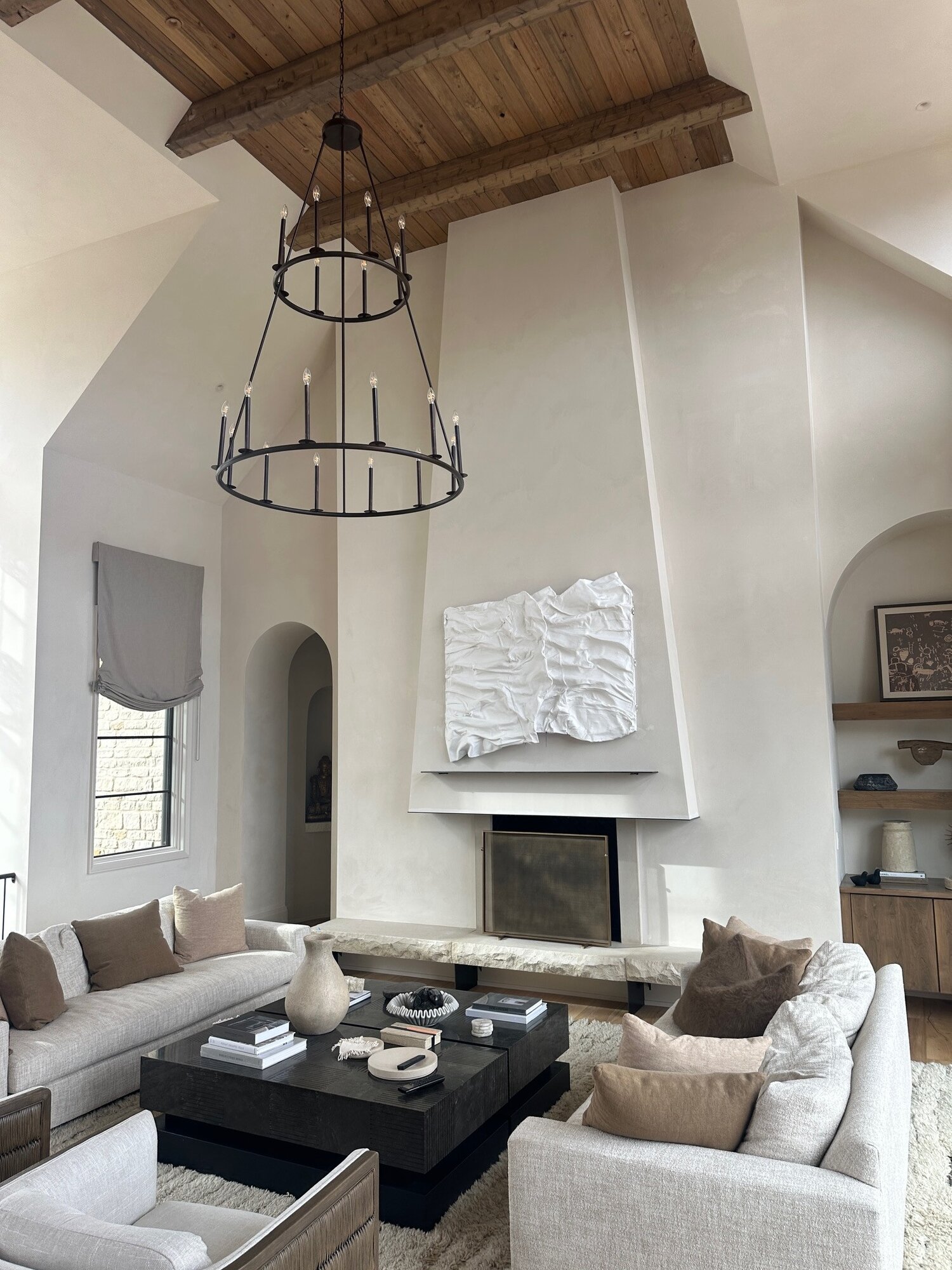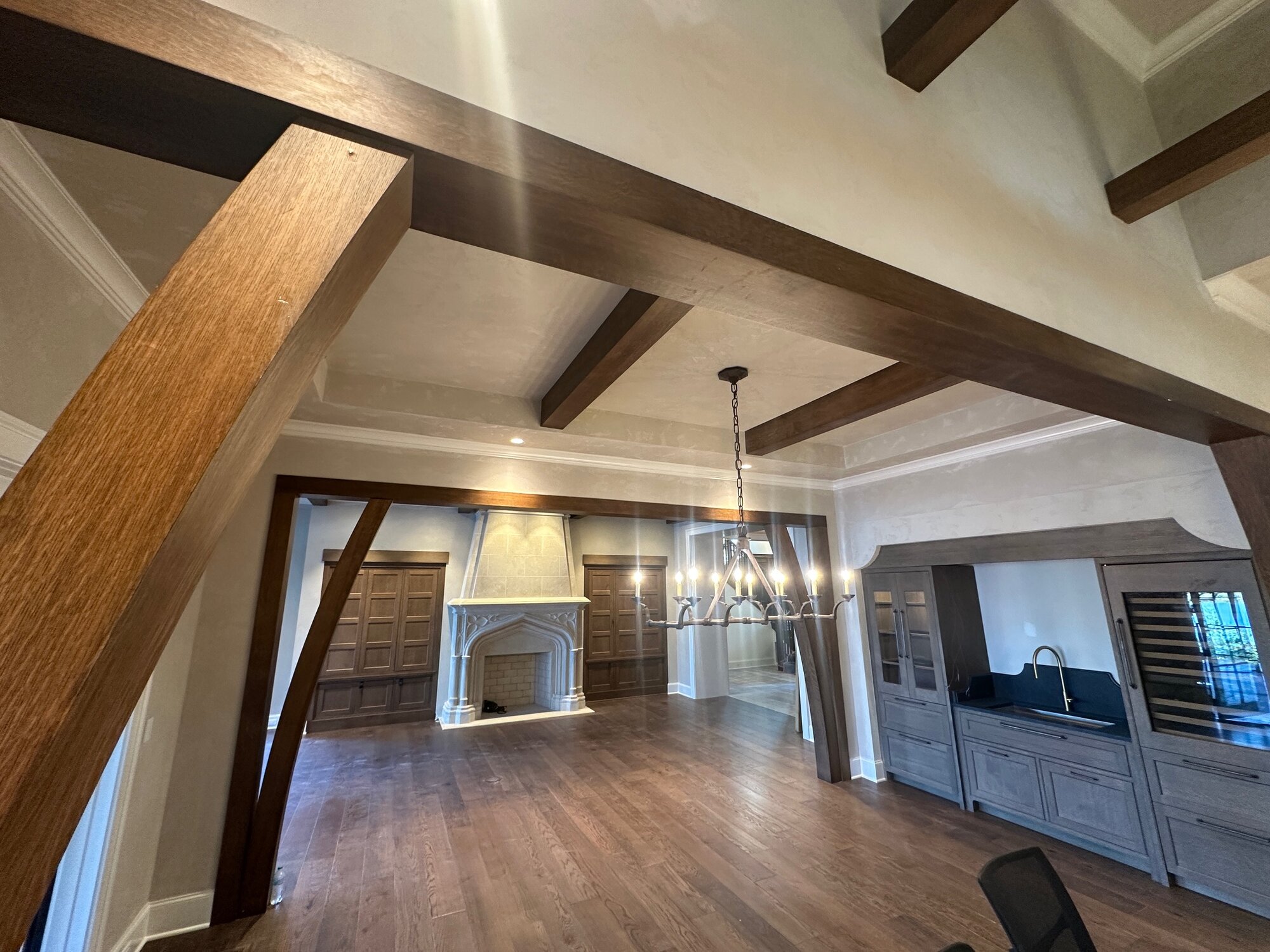

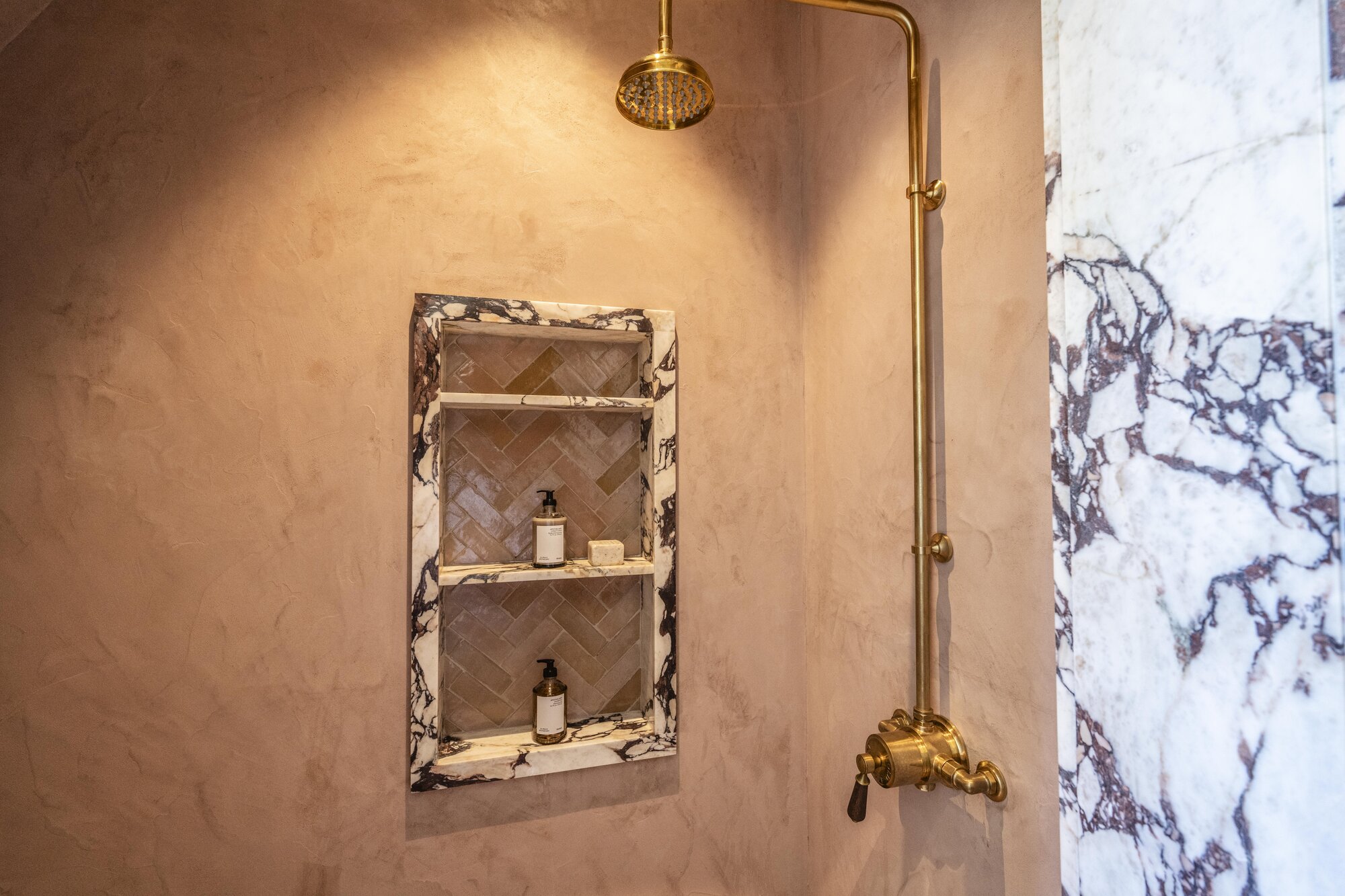
Tadelakt is a Moroccan lime plaster polished with stone and saponified with olive soap into a seamless waterproof skin. Specified for wet rooms, steam rooms, and hammams, it carries water without grout joints, vapor barriers, or tile membranes. The wall itself is the waterproofing.
That last sentence is the part specifiers tend to misread. Tadelakt is not a decorative finish that sits on top of a waterproofing system, it is the waterproofing system. Eight centuries of hammam construction in Marrakech worked that out long before sheet membrane existed, and the chemistry has not changed.
The finish in plain language
Tadelakt (Arabic, meaning to rub or to knead) is a lime plaster from the Marrakech region, built around a high-calcium lime burned from limestone quarried in the Atlas foothills. Applied in thin coats, troweled tight, then polished while still green with a smooth river stone, the surface compresses into something close to a polished mineral skin. The final step is the one the rest of the trade tends to skip: a coat of black olive soap is worked into the surface, where the soap’s fatty acids react with the free lime to form calcium stearate, a water-insoluble mineral. The wall is now hydrophobic at the molecular level.
What it is not. It is not Venetian plaster with a sealer. It is not marmorino in a bathroom. It is not a polished microcement, a polished concrete, or a tinted lime wash. Those finishes share a family resemblance and none of them carry standing water. Tadelakt is the only lime finish in the catalog specified for direct water contact without a backing membrane, and the saponification step is what earns it that spec.
How the finish behaves in a wet room
On a residential wet room (a master shower, a steam enclosure, a powder-room splash zone), tadelakt collapses two assemblies into one. The default specification path runs large-format porcelain on a sheet membrane with epoxy grout, and adds a separate decorative finish above the splash line. The wall reads as two materials with a transition. Tadelakt runs the same finish from the floor curb to the steam ceiling, around the bench return, and across the niche backs. No grout, no transition. One material doing both jobs.
The visual case is part of the spec. With no grout lines and no field interruptions, the wall reads as a single mineral plane. The polish gives back the room’s light at the working distance and softens to matte at twelve feet. The body color can be warm cream, deep clay, soft white, or anything in the lime-fast oxide palette, and the color sits inside the wall rather than on a surface coat.
The thermal feel is the second case. A finished tadelakt wall has real thermal mass. Lime carries heat well and gives it back slowly, which means a steam wall warms with the room and holds the warmth after the steam cuts off. That is part of why the typology evolved with this material in the first place.
Material and method
Tadelakt is three coats over a properly prepared substrate. The composition is high-calcium lime aged in pit (we work from aged lime putty rather than bag lime, which carries more free water and a coarser crystal structure), marble dust and fine silica sand at a graded ratio that tightens with each coat, and mineral pigment integrated wet. No acrylic, no polymer, no synthetic binder. The recipe has to stay mineral or the saponification chemistry does not work.
The scratch coat is keyed and left to cure. The body coat goes on tight, troweled to a true plane, and left to firm. The top coat is the working surface: thinner, finer, applied wet-on-wet in panels small enough that the trowel never crosses a set edge. Once the top coat reaches the right firmness (lime calls this “green,” somewhere between plastic and set, judged by the trowel’s drag), the polish begins. A smooth river stone is worked across the surface in overlapping passes, compressing the lime and closing the surface porosity. The stone polish is what gives tadelakt its signature depth, and it cannot be skipped, shortened, or substituted with a trowel pass.
The saponification step happens after the polish, while the wall is still curing. A solution of black olive soap (potassium soap, traditional Moroccan or a verified equivalent) is brushed across the surface and worked in with the stone again. The soap’s free fatty acids react with calcium hydroxide at the wall surface to form calcium stearate, an insoluble salt that sits in the surface pores. The wall is now waterproof, breathable to vapor, and finished. A second soap pass two to three days later builds the protection.
Substrate prep is where tadelakt installations succeed or fail. The wall behind the plaster has to be rigid, dimensionally stable, and chemistry-compatible. We specify cement board or a true cementitious render base over framing, never green board, never gypsum, never anything that flexes under load. Movement joints are designed into the room before the first coat. A wet room moves (thermal cycling, framing dry-down, structural settlement), and tadelakt is brittle under tension. It will telegraph any substrate movement straight through to the finish.
Where it works, where it does not
Tadelakt works in residential wet rooms, steam showers, hammams, powder rooms, kitchen splash zones, hearth surrounds, and soaking-tub decks. Anywhere the design intent is a single seamless mineral surface with high water exposure, the finish earns its place.
Where it does not belong: pool waterlines and below-grade cisterns where the wall sees continuous immersion (tadelakt sheds standing water but is not specified for hydrostatic pressure), substrates that move, rooms where the homeowner cannot commit to the maintenance regimen, and exterior wet applications in freeze-thaw climates. The surface is fine in those climates, but freeze-thaw cycling at the substrate is unforgiving. A conditioned interior wet room is the right envelope.
The maintenance regimen is the part of the spec that needs to be in the homeowner packet, not just the drawing set. Tadelakt walls get a soap wash, not a tile cleaner. A pH-neutral natural soap, applied with a soft cloth, every few months. The soap pass refreshes the calcium stearate at the surface and is the reason hundred-year-old hammam walls still hold water. Acidic cleaners (vinegar, citrus, anything labeled descaling) will etch the lime and break the waterproofing. We send a one-page care sheet with every wet-room commission and walk the homeowner through it at handover.
The cost framing
Tadelakt is among the more labor-intensive finishes in the catalog. The cost driver is the polish: hand-stone burnishing over the full wet-room surface area, with the wall worked while green in panels small enough to stay wet-on-wet. The saponification pass is comparatively quick. The polish is where the days go. Material cost is modest (lime, marble dust, pigment, soap), and labor is the line item.
Compared against the tile-and-membrane alternative, the cost trade is usually a wash on materials and labor combined, with tadelakt running higher on labor and lower on materials. The real divergence is design intent. If the spec calls for a seamless surface, tile cannot deliver it at any price. If the spec is open to grout joints, tile is the faster path. The finish is specified when the design needs the seamlessness, the thermal feel, and the lime-surface depth, not as a cheaper substitute for anything else.
What to write into the spec
A working tadelakt spec reads roughly: tadelakt finish, three coats, aged lime putty base with graded marble dust and integrated mineral pigment, hand-stone polished while green, saponified with black olive soap in two passes. Substrate: cement board or cementitious render over rigid framing. Movement joints per drawing. Sheen target and body color matched to approved sample board, signed off in room light prior to start. Homeowner maintenance packet at handover.
That paragraph in the drawing set is what the studio works from. Sample boards are sized to the room’s actual lighting condition (see the homepage process strip for how we approach sample-board sign-off), the substrate is inspected and accepted in writing before plaster mobilizes, and the saponification step is confirmed visually and by touch before the room is released to use.
Closing
Tadelakt is the finish that earned its place by carrying water for eight centuries. Specified into the right room, on the right substrate, with the polish and the soap pass treated as non-negotiable, it does the same thing in a residential master bath. The wall is the waterproofing.
Start with a conversation. Contact the studio.