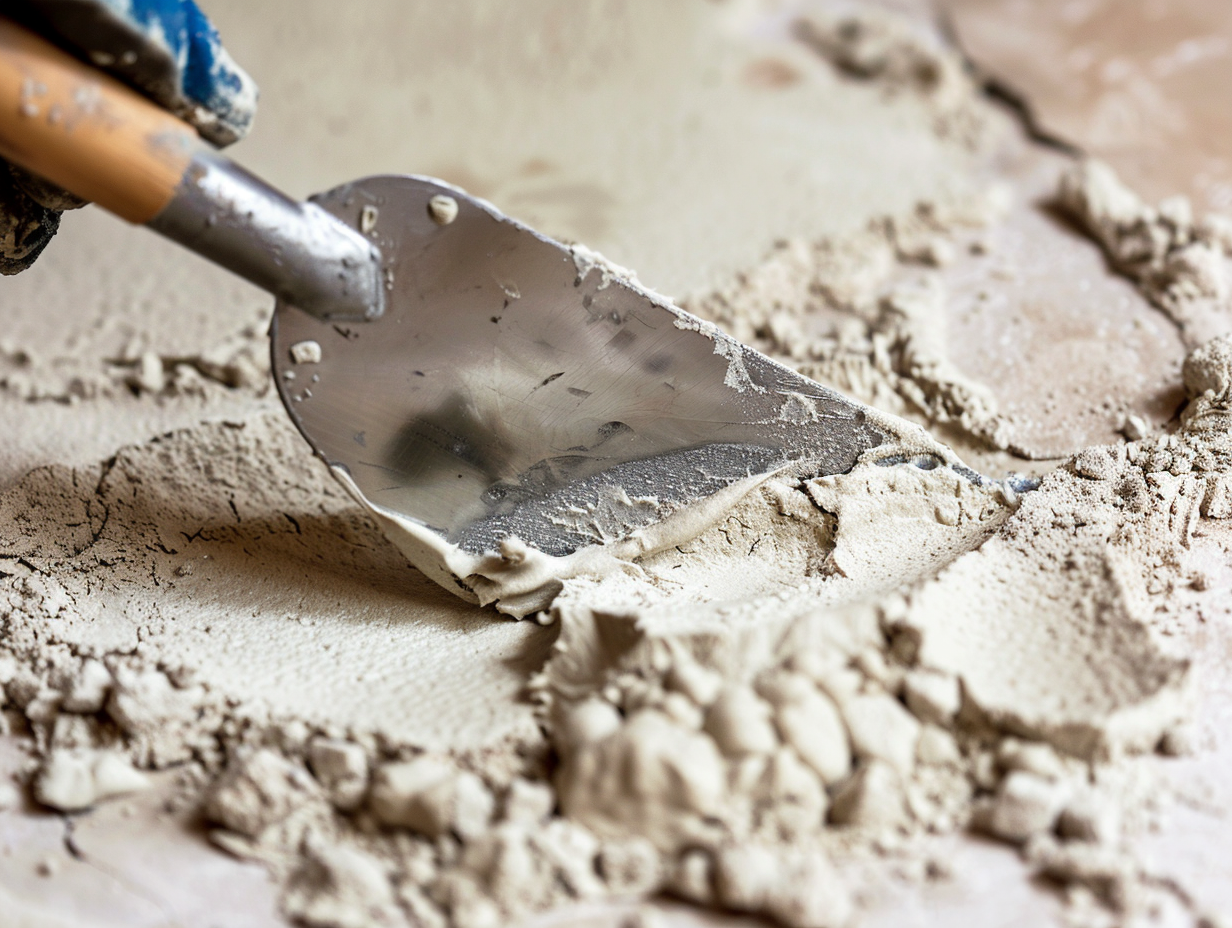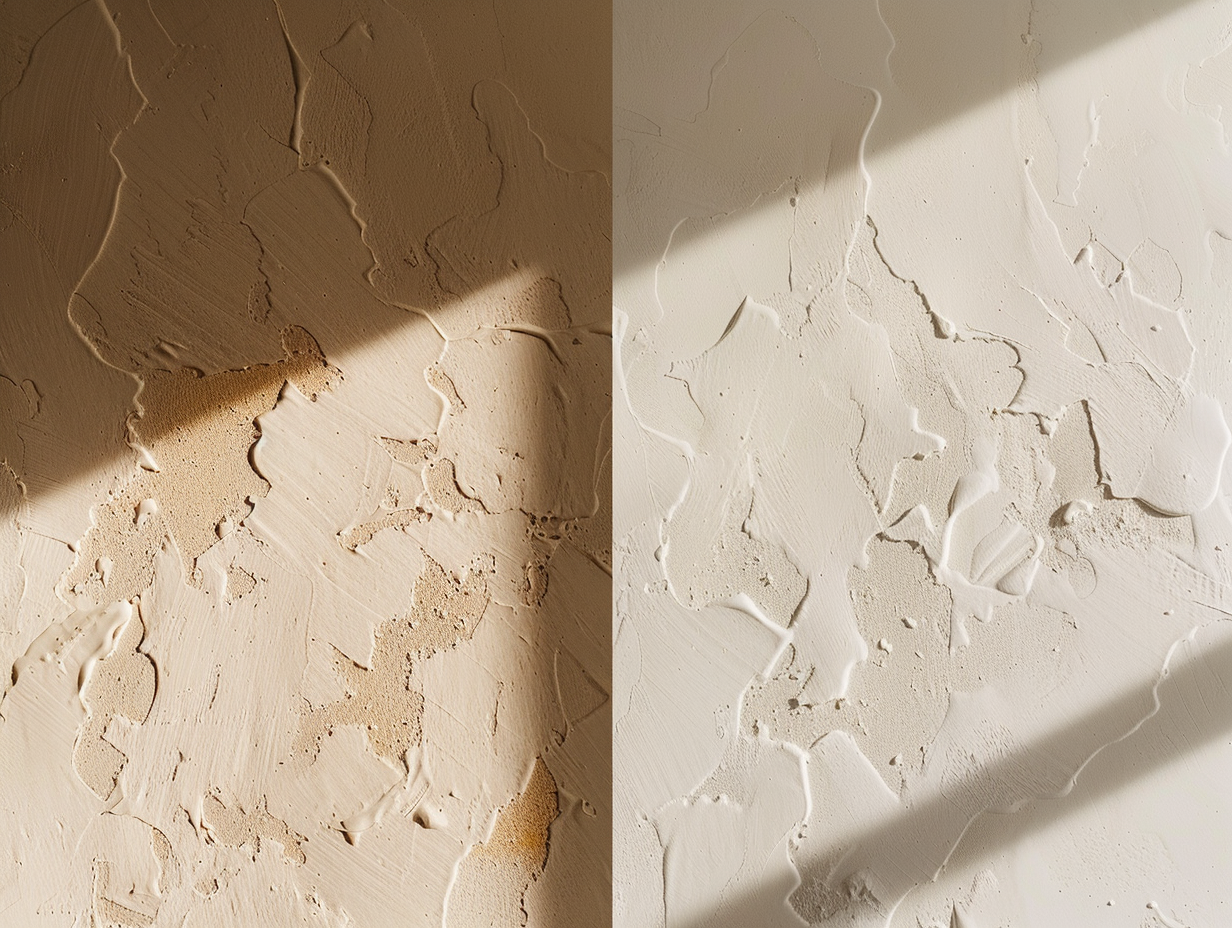

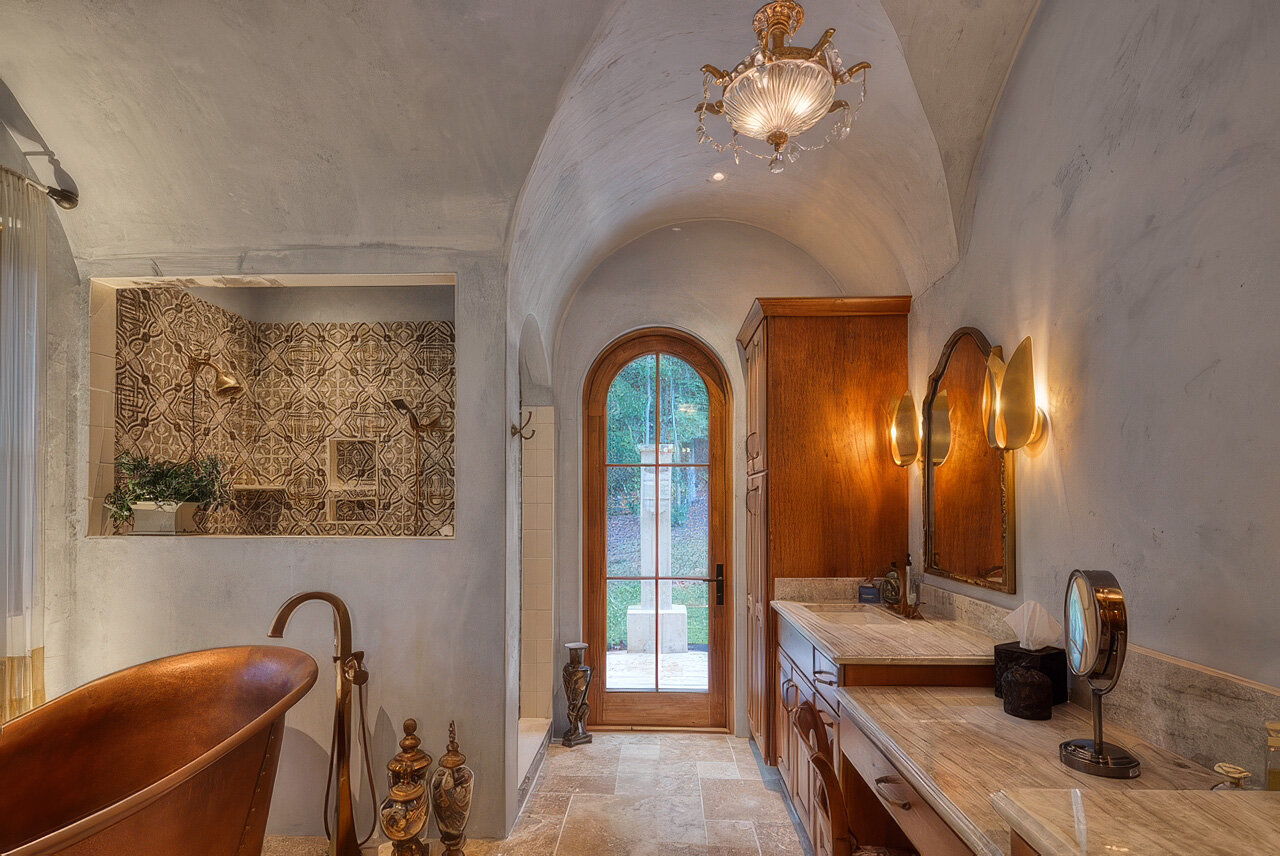
Limestone plaster is Plaster by Orciani’s coined name for a single-coat smooth plaster with integral mineral pigment, troweled in one pass over a prepared substrate. Specify it for residential interiors that want soft mineral color, a quiet matte read at three meters, and a wall that breathes with the building.
A note on the name
“Limestone plaster” is a name the studio coined for a specific finish we offer. Technically, it is a one-coat smooth plaster with color added to the material itself. We call it limestone plaster because that is what the wall reads as when the work is done: soft, mineral, the color sitting inside the surface rather than painted onto it. The name is ours. The finish is honest about what it is.
What the wall is, in plain language: a single pass of smooth plaster, pigmented before it goes on, troweled flat over a properly prepared substrate. The color is integral, mixed into the material. Nothing is layered over it, nothing is glazed onto it. The trowel does the work, the pigment does the work, and the wall is what it is when the studio leaves the room.
It is not Venetian plaster, which is also lime-based but burnished to a polished, layered surface with steel. It is not marmorino, which carries a heavier marble dust load for a more textural body. It is not painted drywall, which sits on top of the wall as a film. Limestone plaster is the wall.
How the finish behaves in the room
On a residential interior (an entry hall, a stair landing, a primary living room, a library), limestone plaster reads as a soft mineral plane that holds raking light without throwing it back. Morning sun across one face does not flash specular highlights, because there is no specular surface to flash. The wall takes color from inside, not from a film on top, and that color is steady through the day even as the light changes around it.
The finish is at home alongside heavier architectural elements: dark beamed ceilings, stone hearths, leaded glass throwing afternoon light in long shallow bands. It is the wall that lets those elements lead. On a Tudor revival entry or a Federal-style stair hall, limestone plaster sits back and gives the architecture room. On a modern interior with quieter detailing, the same finish does the lifting, and the wall itself becomes the architectural element.
Substrate, light, and scale all matter on the way to specification. A wall with a slight wave in the substrate looks intentional under limestone plaster, because the smooth single-coat pass does not pretend to a machined flatness. The same wave under a polished Venetian would read as a defect. That tolerance for the real geometry of a house is part of why this finish sits well in renovations and older buildings.
Material and method
The body is a smooth plaster designed to carry pigment cleanly. The pigment is mineral, mixed into the material at the bucket before any of it reaches the wall. Integral color is the difference between a finish that holds its tone for the life of the room and one that drifts as a surface coating ages off the wall. There is no surface stain, no glaze, no toned topcoat. The color you see is the color of the material.
The coat sequence is one. A single pass of the pigmented plaster, troweled smooth over the prepared substrate. This is what separates limestone plaster from a multi-coat lime build like the kind specified for a heavier traditional scratch-body-top sequence. The discipline is different. With one coat, the substrate preparation has to be exact, the pigmented mix has to be consistent across the batch, and the trowel has to lay the material down evenly across the wall in a single working session per face, wet-on-wet so the seams between sections vanish before the plaster begins to set.
Substrate prep does the quiet work that the single-coat application depends on. On gypsum board the studio runs a bonding primer keyed to the plaster, with attention to corner reinforcement and any joint detailing that has to disappear under the smooth surface. On a sound brown coat, the prep is lighter, but the principle is the same: the wall the plaster goes on has to be ready to carry a single pass without telegraphing anything underneath.
Color tuning happens at the sample stage and only at the sample stage. Once the spec is set and the material is mixed for the wall, the pigment is the pigment. That is why the sample-board pass matters: it is the moment to get the tone right under the room’s own light, against the floor and the trim and the daylight that will live with the wall. Approval at the board is approval of the wall.
Where it works, where it does not
Limestone plaster works in living rooms, dining rooms, entry halls, bedrooms, libraries, stair halls, and powder rooms. It carries beautifully in spaces with strong directional light, because the smooth single-coat surface and the integral pigment hold a quiet, even read across the wall. It is comfortable in a Tudor entry, a modern hallway, or a mountain great room where stone and wood are doing the heavier architectural lifting and the wall wants to sit back.
It is not a wet-area finish. A shower wants tadelakt or a properly waterproofed assembly behind a different surface. A steam-prone laundry wants ventilation engineered to the actual load, with a finish chosen for that condition. It is also the wrong call when the design intent is a machined, mechanical plane that reads like paint. Limestone plaster is plaster, with the soft hand of a mineral surface. If the client wants drywall, specify drywall. The honest move is to match the spec to the room the client actually wants.
The breathability argument matters too. A pigmented lime-based plaster moves vapor in both directions. Across the western North Carolina service area, where the seasonal humidity swing is real, that breathability keeps moisture from getting trapped against framing. In Central Florida, the same building-science point carries even more weight. A wall that breathes is a wall that handles its climate.
What to write into the spec
A clean limestone plaster spec names six things: the finish (limestone plaster, Plaster by Orciani proprietary, single-coat smooth pigmented plaster), the substrate and prep (bonding-primed gypsum board, or brown coat over lath, with corner reinforcement called out), the pigment direction (integral mineral pigment, tuned at sample), the application (single-coat, wet-on-wet across each face), the sheen target (smooth matte, quiet read at three meters), and the sample-board sign-off (boards reviewed in the room under actual light, signed off by designer and owner before application begins).
The studio runs the sample-board pass in the room when the schedule allows it, because no other light tells the truth the way the room’s own light does. Sample-board approval is the gate that protects the project from a finish that looked correct in a swatch and wrong on the wall.
The cost framing
Limestone plaster does not price like paint, because it is not paint. It prices like a hand-applied mineral finish from a specialty studio. Variance comes from a short list of inputs: substrate prep on the scope, sample-board count and revisions to lock the pigment, the square footage of contiguous wall the single-coat pass has to cover in one working session, and the access conditions of the space.
Against paint over the life of a wall, the math gets more comfortable. A limestone plaster wall does not need a repaint cycle. The integral pigment does not fade off the surface, because it is not on the surface. The wall ages by sitting still. That is the framing that matters when the client compares unit prices against a builder-grade repaint schedule.
Closing
Limestone plaster is not a coat of paint on a wall. It is a wall, finished once, in a color that belongs to the material. Start with a conversation. Contact the studio.