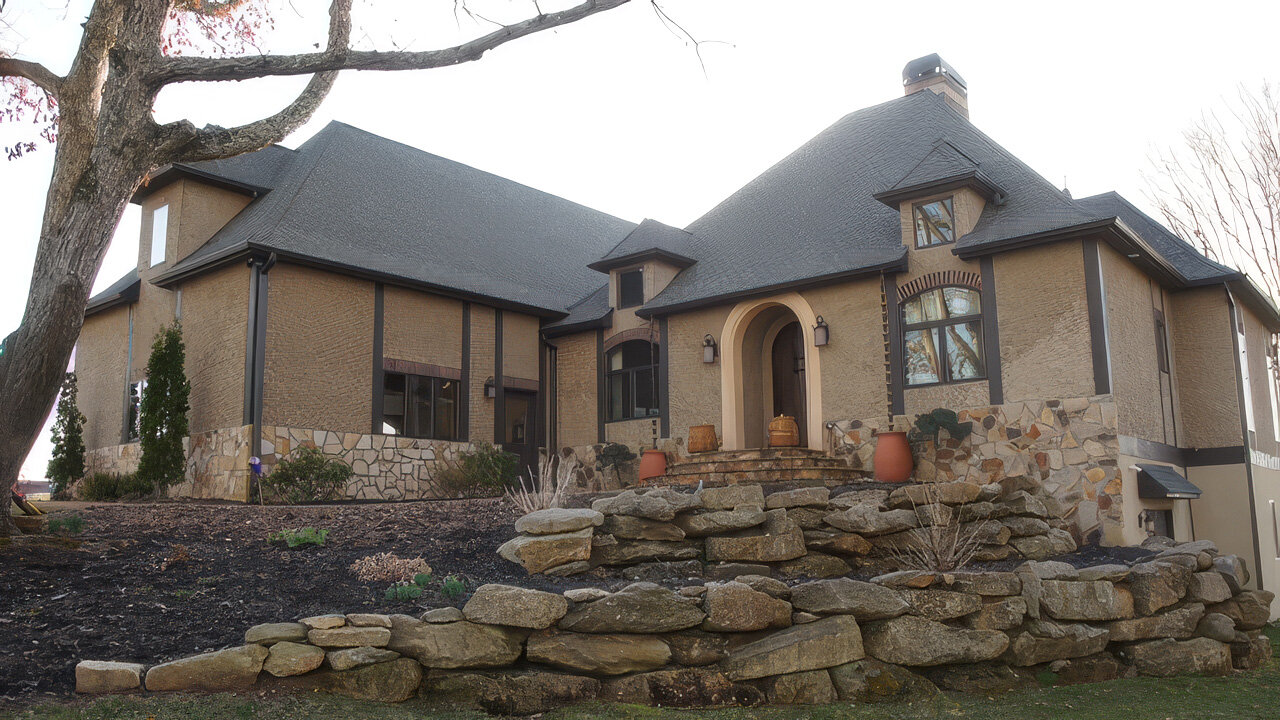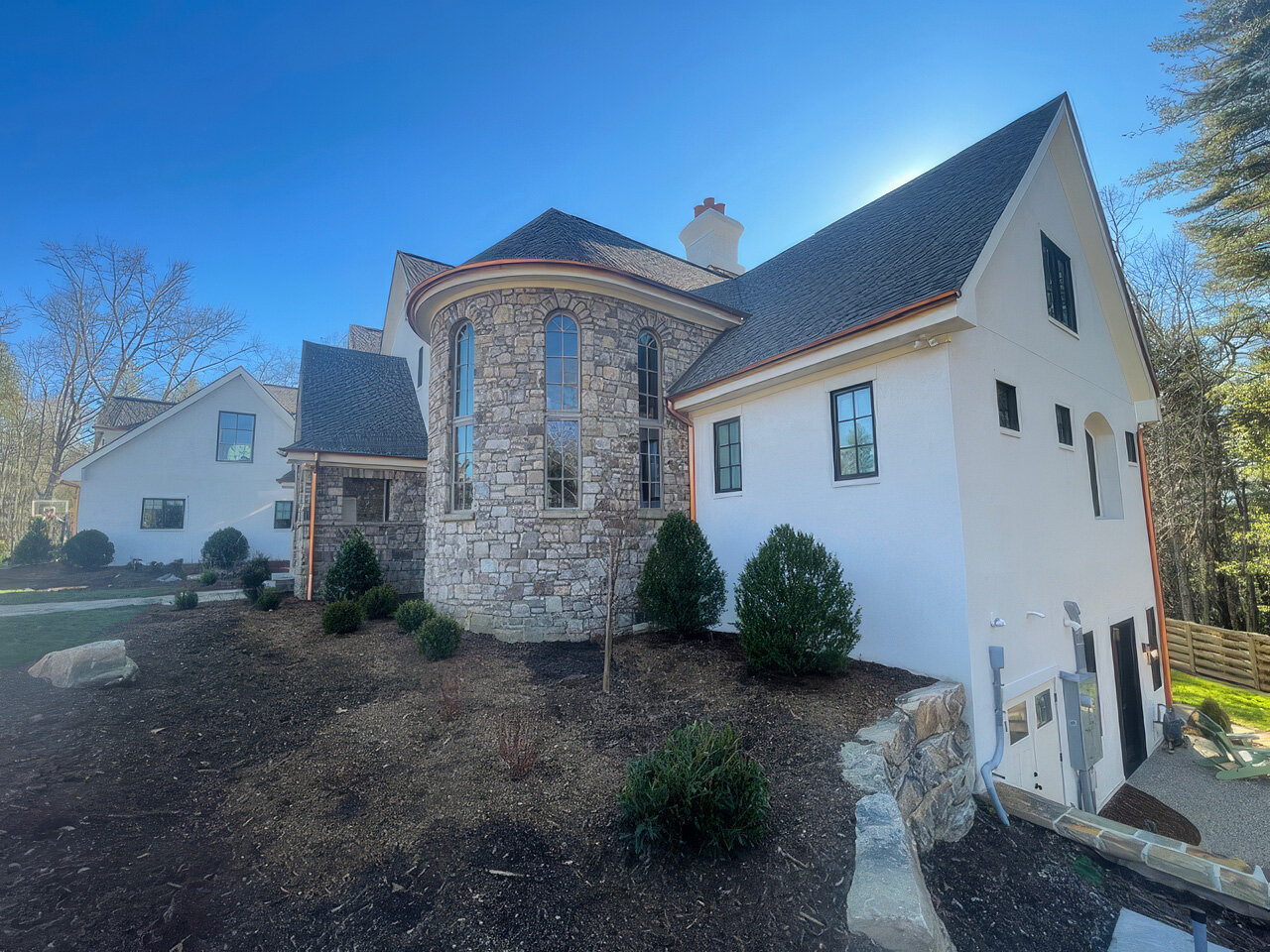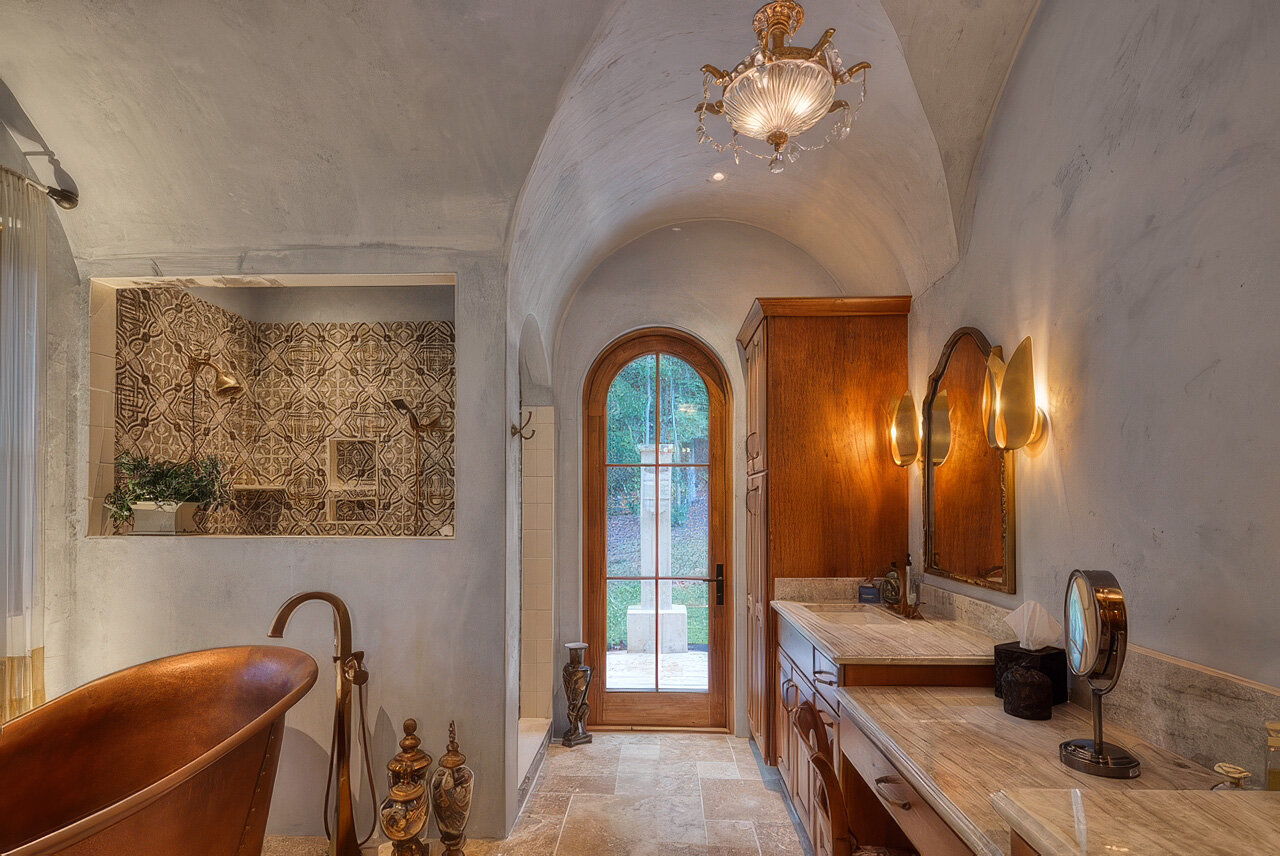

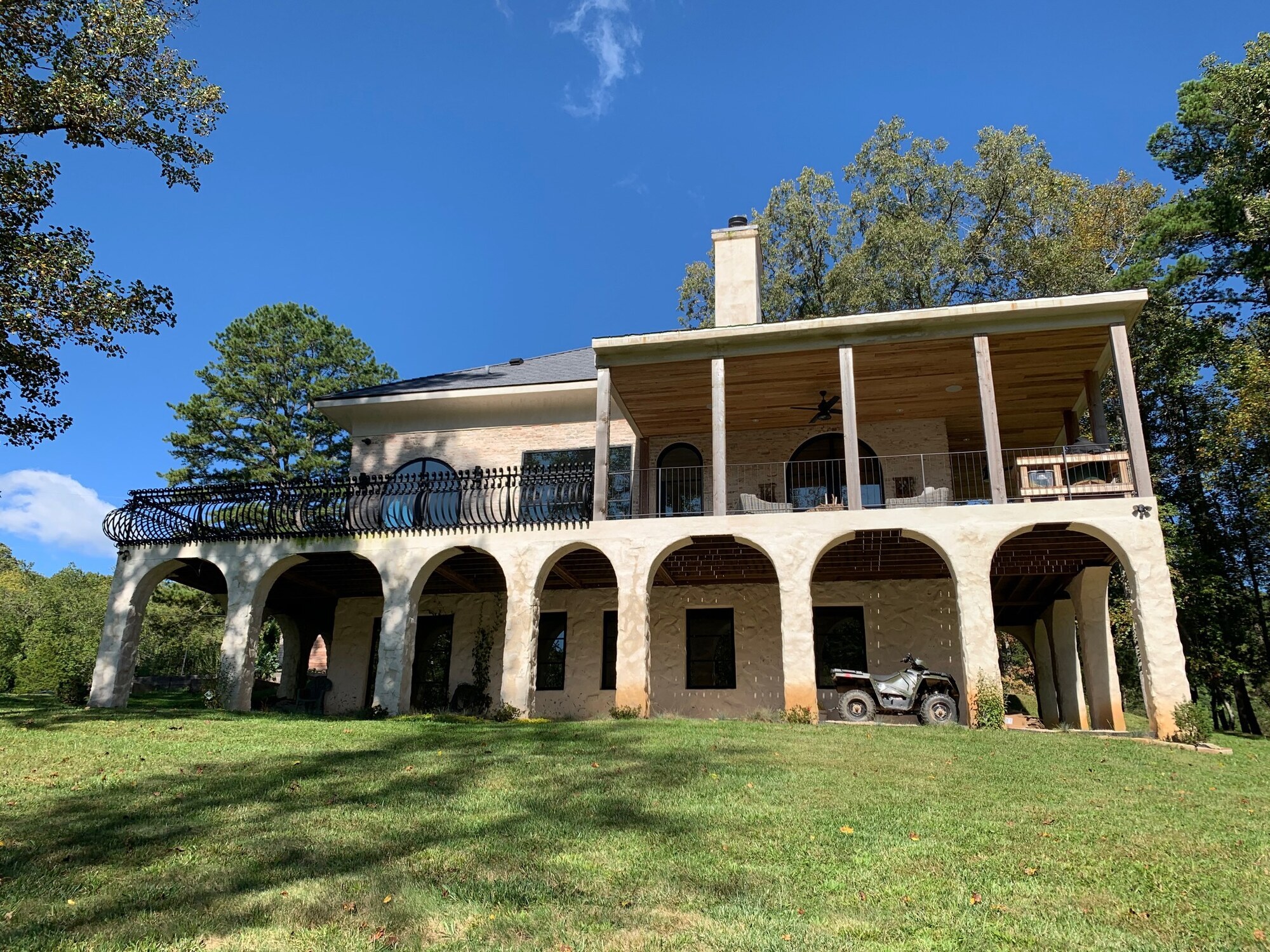
German Schmear is a thin parge coat of lime mortar troweled and brushed across brick or stone so the masonry still reads through the wash. Specify it when the building wants a softened, aged exterior without losing the substrate underneath. Partial coverage by design, hand-finished panel by panel.
The finish in plain language
German Schmear, sometimes called a mortar wash or schmeared brick, is a lime-based mortar applied as a partial coat across a porous masonry wall. Trowel goes on, brush works it across the field, the wet mortar is wiped back where the architect wants more brick exposed. The wall ends up reading as a quiet conversation between the original masonry and the mortar laid over it. Roughly thirty to sixty percent of the brick or stone still reads through the finish. The number is set by sample board, not by formula.
It is not the same as three nearby things, and the differences matter on a spec sheet.
A limewash is a thinned, pigmented slurry of slaked lime and water, soaked into the masonry like a stain. It penetrates rather than parges. It can be reapplied in coats and can be wet-distressed off. Visually, the brick texture stays sharp under a limewash because there is no body of mortar laid on top of it.
A full lime stucco is the opposite move. The substrate is intentionally hidden. Stucco is built up in a scratch coat, brown coat, and finish coat to plane and cover the wall entirely. The studio’s piece on pigmented lime stucco walks through that assembly. German Schmear borrows the binder chemistry of stucco and skips the coverage.
Paint over brick is the answer the market reaches for and the one the studio will most often steer a client away from. Paint is a film. It sits on top of the brick, peels at the edges over a seven to twelve year cycle, traps moisture inside the wall, and once it is on it is on. Stripping painted brick back to bare masonry is invasive, expensive, and rarely complete. German Schmear and paint solve different problems for different walls. The studio is comfortable saying when paint is the right call. On historic or porous brick that the client wants to soften without losing, it almost never is.
How the finish behaves on the building
A schmeared elevation reads three different colors across the day. White-warm mortar reads cool against red brick at noon, and the same mortar reads pink-warm around the same brick at sundown. That movement is the wash doing what a lime wash does. A painted brick wall is one color all day long.
The studio works elevations in panels sized to the masonry break lines so the wet-edge transitions hide in shadow joints rather than landing mid-field. Two passes on each elevation: the first lays the lime mortar across the brick at parge thickness, the second (while the mortar is still workable) wipes sections back with a damp burlap and a stiff brush to expose more brick where the elevation needs to breathe. The finish is committed on the wall, not on the truck.
Material and method
The mix on a German Schmear is mortar, not stucco. The studio works from a lime mortar gauged to roughly Type N consistency when the brick is in the soft to medium range and steps to Type S when the substrate is harder and the wall takes more abrasion. Either is a lime-rich mortar with portland in modest proportion, sand graded fine enough to brush flat without tearing, and integral white pigment from the limestone fines themselves when an off-white reading is wanted. Color pigment, when added, goes in the mix as a percentage of binder. The wash is the color all the way through, so a scuffed edge still reads the field.
Sand grade is where many German Schmear jobs land in the wrong place. Too coarse and the brush leaves furrows across the brick faces. Too fine and the wash slicks over the mortar joints and looks painted. A well-graded sand from medium to fine, with the fines screened to a consistent percentage, gives the trowel a body to hold and the brush something to leave behind without scoring.
Application discipline is trowel plus brush, often in that order, sometimes layered. The trowel lays the mortar across the field at a parge thickness (somewhere in the range of an eighth to a quarter inch over the high points of the brick, thicker where mortar joints want to be filled and softened). The brush, a stiff masonry brush wet with the gauging water, breaks the trowel marks and pulls the wash across the brick faces. Wet wiping with burlap, while the mortar is still green, is the move that exposes more brick where the design wants it exposed. None of this is a formula. It is a sample board signed off under exterior light, then reproduced on the wall by the same hands.
Cure is slow and intentional. Lime mortar hardens by carbonation, not by drying, and the wall holds its color and structure best when the first three to seven days are kept damp on a misting schedule, especially in Central Florida summer sun. A flash-dried German Schmear powders at the surface and reads chalky a year in. A correctly cured one tightens into the masonry and reads softer every season.
Where it works, where it does not
German Schmear belongs on porous masonry: brick, natural stone, soft block, terracotta. Anything mineral that the lime mortar can bond to mechanically and chemically. On these walls the wash behaves the way the architect drew it: partial coverage, breathable surface, integral color, no peel cycle.
It does not belong over painted brick without a full strip and prime. A film coating between the lime mortar and the brick destroys the mechanical key, and the schmear will lift in sheets. If a wall has been previously painted, the honest answer is either a full strip back to bare masonry (slow, expensive, often partial) or a different finish strategy altogether. The studio will say so before sample-boarding the wrong assembly.
Freeze-thaw climates change the binder math. The southern US (coastal South Carolina, coastal Georgia, Central Florida) sits in the climate band where a properly gauged lime mortar holds its structure across the seasonal cycle. In hard freeze-thaw zones the binder needs more hydraulic content and the schmear needs a winter protection schedule during cure. The studio does the work; it is not the same job as the southern one and the spec writes differently.
The cost framing
A German Schmear runs meaningfully more upfront than a paint job on brick. The differential comes from the lime mortar itself, the sand grading, the panel discipline on the wall, and the hand-finishing that makes the wash read as a wash and not as a coating. It typically prices in the same order of magnitude as a full lime stucco of comparable area, because the binder and the crew time are similar, even though the coverage is partial.
What recoups the differential is the fifteen to twenty year window in which a properly applied lime mortar wash does not enter the repaint cycle. Paint over brick will want recoating once or twice across that span, and a third time will be looking at substrate damage. A schmear in the same window will be settling further into the masonry and reading more like the building it is on. Over the life of the wall, the lime answer typically costs less per year of service and looks like architecture the entire time.
Variance inside the line item is mostly sample boards and coverage percentage. A wall finished to thirty percent brick exposure is a different pass than one finished to sixty percent, and a multi-pigment schmear (a warm body with a cooler accent on the chimney, for example) is more work than a single pour. The studio walks the sample boards with the architect and the client before the wall is mixed at scale.
What to write into the spec
What goes on the drawing: lime mortar wash (German Schmear) over the named substrate (e.g., modular red brick in running bond), applied as a parge coat at approximately one eighth to one quarter inch over masonry high points, trowel and brush application with wet-wipe exposure of substrate per approved sample board, integral pigment per submittal, target masonry exposure percentage per sample board, mist-protected cure window of three to seven days, sample sign-off required under exterior light before production. Reference the sample-board approval back to the studio’s homepage process.
Two details earn their place on the spec. First, name the substrate explicitly and call out any previously painted areas, because the prep on a painted section is a different scope. Second, set the target masonry exposure as a percentage and tie it to an approved sample board mounted on the building, not a chip in a binder. Coastal light reads a lime wash differently than studio light, and the building’s own exposure is the only honest reference.
A line that says “schmear the brick white” is how a wall ends up either over-covered (a painted look the client did not want) or under-finished (a streaky wash that reads as a mistake). A line that names the binder, the substrate, the application sequence, the target exposure, and the cure window is how the wall reads the way it was drawn.
Closing
Start with a conversation. Contact the studio.